River Parks/Arkansas River
|
|||||
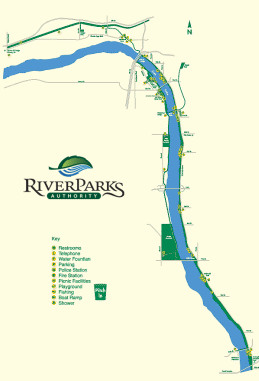
River Parks extends from 11 St. South to 101 St. South between Riverside Drive and the Arkansas River on the east bank, and along the west bank from 21 St. to 41 St. S. There are parking areas provided on the east side at Galveston St., 31 St., 41 St., and 51 St. Parking west of the river is located at 21 St. A jogging and bicycle path begins at 11 St. and follows the river to 56 St. S. For additional information visit the River Parks web site. Walk the river bank south of 11 St. There are large cottonwood, elm, oak, willow, and mulberry trees with heavy underbrush along the river. In winter White-crowned and White-throated sparrows and Dark-eyed Juncos are numerous. The Purple Finch and American Goldfinch are also common. The Clay-colored Sparrow has been found during spring migration, a time when many warblers gather here including Parula, Yellow, Orange-crowned, Black-and-white, Blackpoll, Blackburnian, Chestnut-sided, and Wilson's. Ducks can be observed on the rocky reefs in the river in winter and spring and shorebirds are regular visitors in migration.
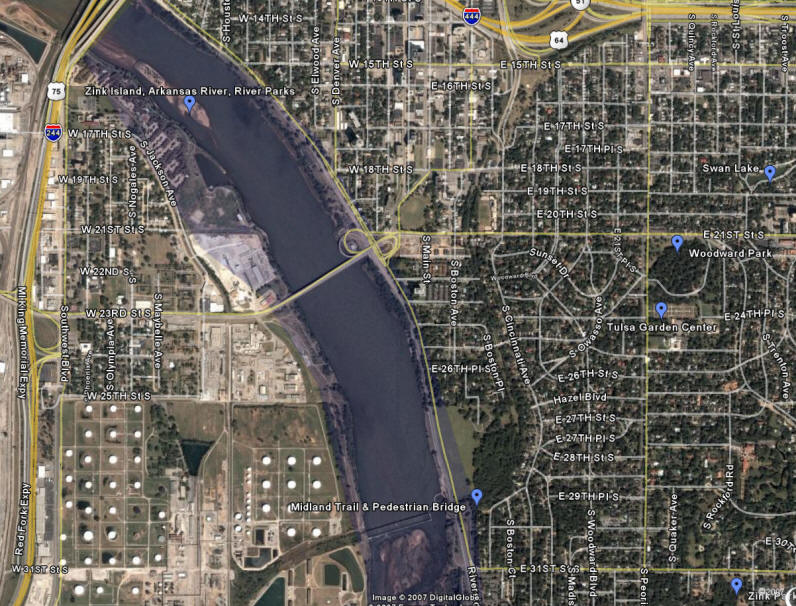
The man-made Zink Island, in Zink Lake,
the impoundment formed by the low water Zink Dam, is used by the
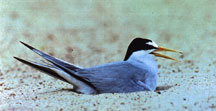
endangered Interior Least Tern for nesting.
At 19 St. park on the west side of Riverside Drive and walk south. Bell's Vireo has nested here in the underbrush. Thrushes are here in migration and the Bobwhite is a resident. The parking area at 31 St. is located on the east side of Riverside Drive. A pedestrian bridge allows access to the west bank of the river as well as the east bank. A jogging and bicycle path also goes east along the abandoned railroad right-of-way. (See Midland Valley Trail) The 41 St. parking is on the west side of Riverside Drive south of the 41 St. intersection. Bald Eagles are often seen along the river, and in 2007 one was nesting on the west bank directly across form the 41 St. parking lot. White Pelicans stop over in migration; Cormorants may number in the hundreds; and Osprey are occasionally seen. In the large trees in summer are Northern and Orchard orioles, Eastern and Western kingbirds, Summer Tanagers, Painted and Indigo buntings, and Scissor-tailed Flycatchers. Warblers, Catbirds, and thrushes frequent the mulberry trees and the shrubbery along the bank. This is also a likely place to look for the Caspian, Black, and Forster's terns in late spring and early fall. There is a good trail south to 61 St. The best birding along this five-mile mile trail is found during the morning hours.
|
 Fred
Pianalto, 1927 - 1996, was one of the first people to discover
the Terns utilizing the river, and spent many years observing
and protecting them.
Fred
Pianalto, 1927 - 1996, was one of the first people to discover
the Terns utilizing the river, and spent many years observing
and protecting them.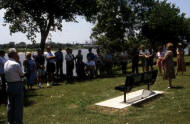 The
island may be observed from the River Parks area near 15th Street, which
features a bench dedicated to the late
The
island may be observed from the River Parks area near 15th Street, which
features a bench dedicated to the late