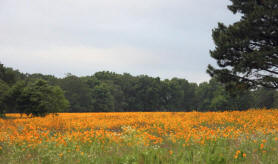
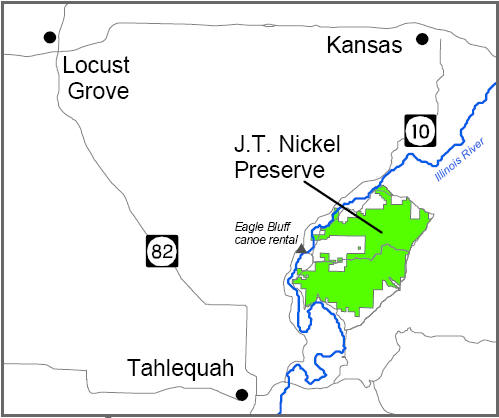
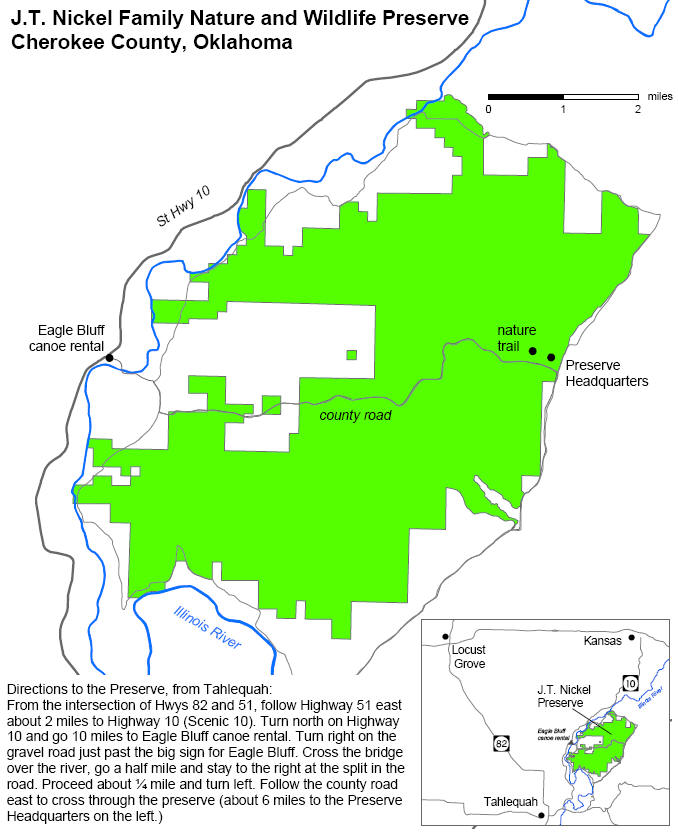
Nickel PreserveCherokee CountyThis account from the Nature Conservancy Web Site. The J. T. Nickel Family Nature and Wildlife Preserve is the largest privately protected conservation area in the Ozarks. The preserve was formed in 2000 as the result of a land gift from the John Nickel Family. This 15,000-acre landscape rests in eastern Oklahoma's rolling Cookson Hills and overlooks the Illinois River. Spring-fed creeks meander amid a rugged topography of steep slopes and narrow valleys harboring a mosaic of oak-hickory forest, lofty pine woodland, and a diverse mix of savanna, shrubland, and prairie. The preserve provides optimal habitat for a suite of uncommon breeding bird species, including some whose survival requires large blocks of intact habitat.
Biodiversity Threats in the area include habitat loss and fragmentation. Fire exclusion over the past several decades has also led to the decline or loss of a host of plants, animals, and natural communities. Invasive species such as sericea lespedeza threaten to replace diverse communities of native grasses and wildflowers. Incompatible land management practices reduce the biological integrity of area streams. The Nickel Preserve is perhaps the last landscape-scale opportunity to address these threats in the Oklahoma Ozarks by protecting and restoring a fully-functioning ecosystem. Sycamore Leaves What the Conservancy is doing now will restore and maintain the natural plant and animal communities of this former cattle ranch. Bermuda and fescue fields are being replaced with tallgrass prairie and woodland in an effort to re-create a unfragmented native landscape. Prescribed burns here will restore the open woodlands conditions that Conservancy scientists believe historically existed. Since 2000, the return of fire on site has produced an astounding increases in botanical diversity and abundance. The preserve will also serve as a demonstration site to engage public and private conservation partners in best land management practices to help conserve lands in the greater conservation area outside the preserve's boundaries. The Conservancy is currently pursuing the reintroduction of elk, a once-common ungulate absent from this Ozark landscape for more than 150 years. |