Woodward Park & Tulsa Garden Center
|
|
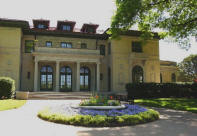
The Woodward Park complex, the largest and most rewarding for birders, includes Woodward Park, bounded by Peoria Ave. on the west, 21 St. on the north, and Rockford on the east. To the south is the Tulsa Municipal Rose Garden, and south of that are the Tulsa Garden Center and Arboretum. The whole area is a Bird Sanctuary.
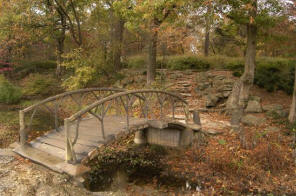
The center also operates the Arboretum east of the building where 270 trees and shrubs which grow in Oklahoma are to be found. The Red-breasted Nuthatch often winters here as does the Rufous-sided Towhee and the White-throated, Harris's, and Song sparrows. The Tulsa Municipal Rose Garden, in a formal terraced setting with pools, fountains, and goldfish, grows 9000 rose bushes of some 270 varieties. The peak blooming periods are May and October. East of the Rose Garden is a row of very large cedar trees which provides shelter for Common Screech-Owls and winter passerines. The test garden beyond the cedars attracts numerous species of birds at all seasons. Woodward Park on the north may be entered by car from Peoria or from Rockford to reach parking near the Rose Garden. The park is well used; never leave a car unlocked. Built on a hill, the park slopes northward toward 21 St. and toward Peoria on the west from its highest point on the south and east. The hill is characterized by very large, mature deciduous trees, mostly oaks which are much older than the City of Tulsa. As these magnificent old trees are beginning to die, the park has begun an extensive program of replanting.
Birding in Woodward Park is excellent all year but can be spectacular during migration. One year 17 warbler species were identified in one tree. The Solitary Vireo and Rose-breasted Grosbeak are regular migrants. Palm Warblers and Ovenbirds prefer the trails and beds in the azalea gardens. After "Yellow-shafted" and "Red-shafted" flickers were observed courting one spring, a hybrid Northern Flicker was found the following fall. |